Sorry, we're currently closed. Please call NHS 111

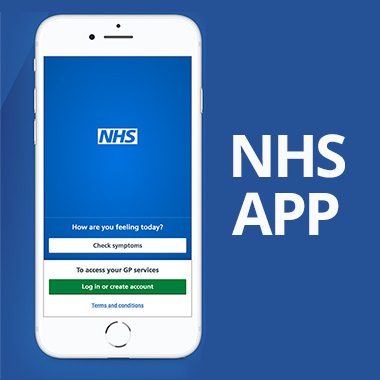
You can now register to be a patient at this practice, via the NHS App - see the registrations page to begin the process. Enhanced Access appointments with a Nurse and GP are available at this surgery on a Wednesday evening and a Saturday morning.
Tests & Results
Test Results
Where pathology and x-ray results show that further action is required the Practice will contact you if any further action is necessary.
Even if you do not hear from us, you are welcome to check your results. In this case, please telephone the surgery
(0151 336 4121) after 2.00pm Monday to Friday. Alternatively results will be available for you to view on the NHS App.
Our reception staff are not qualified to comment on results therefore it is your responsibility to check them and make any necessary follow-up appointment with the doctor.
Please note that we do have a strict policy regarding confidentiality and data protection. In this respect we will only give out results to the person they relate to unless that person has given prior permission for their release or if they are not capable of understanding them.
Blood Tests
A blood test is when a sample of blood is taken for testing in a laboratory. Blood tests have a wide range of uses and are one of the most common types of medical test. For example, a blood test can be used to:
- assess your general state of health
- confirm the presence of a bacterial or viral infection
- see how well certain organs, such as the liver and kidneys, are functioning
A blood test usually involves the phlebotomist taking a blood sample from a blood vessel in your arm. and the usual place for a sample is the inside of the elbow or wrist, where the veins are relatively close to the surface. Blood samples from children are most commonly taken from the back of the hand. The child’s hand will be anaesthetised (numbed) with a special cream before the sample is taken.
You can find out more about blood tests, their purpose and the way they are performed on the NHS Choices website.
X-Ray
An X-ray is a widely used diagnostic test to examine the inside of the body. X-rays are a very effective way of detecting problems with bones, such as fractures. They can also often identify problems with soft tissue, such as pneumonia or breast cancer.
If you have a X-ray, you will be asked to lie on a table or stand against a surface so that the part of your body being X-rayed is between the X-ray tube and the photographic plate.
An X-ray is usually carried out by a radiographer, a healthcare professional who specialises in using imaging technology, such as X-rays and ultrasound scanners.
You can find out more about x-ray tests, how they are performed, their function and the risks by visiting the NHS Choices website.
Opening Times
- Monday08:00am to 06:30pm
- Tuesday08:00am to 06:30pm
- Wednesday08:00am to 06:30pm
- Thursday08:00am to 06:30pm
- Friday08:00am to 06:30pm
- SaturdayCLOSED
- SundayCLOSED
Useful Links